Andhadun the brilliant thriller with a hidden French connection
Is andhadhun really original or does it brilliance come from a lesser known French short ?
3/16/20264 min read
There’s something deeply satisfying about a film that keeps you guessing long after it ends. Andhadhun is exactly that kind of film sharp, unpredictable, and just a little bit wicked. It’s the kind of thriller that makes you question everything you just watched, then question yourself for believing any of it in the first place. But beneath all its twists and dark humor lies a detail that often sparks debate: how original is it, really?
The answer isn’t as simple as calling it a remake or dismissing it as entirely original. The truth sits somewhere in the middle, and that grey area is what makes the story behind Andhadhun almost as interesting as the film itself.
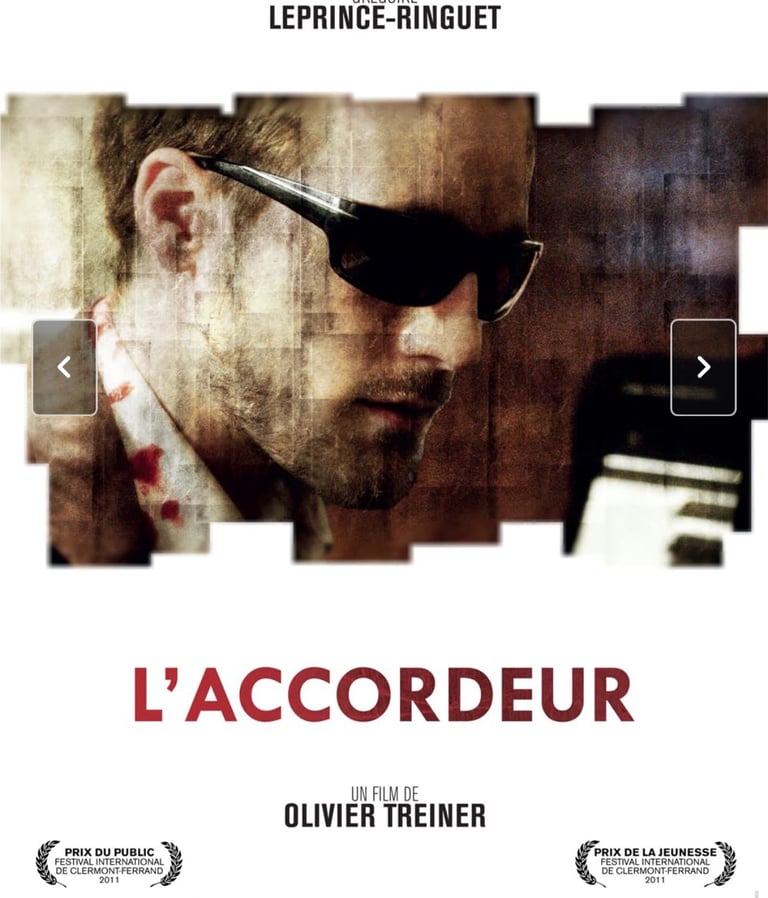
At the heart of the conversation is a French short film, L’accordeur (the piano tuner ) Clocking in at just over 13 minutes, it introduces a deceptively simple premise a pianist who pretends to be blind to gain work and access to people’s lives. It’s a clever idea, one that plays with perception, morality, and the thin line between performance and reality. In that short runtime, it creates tension and leaves viewers with an unsettling aftertaste.
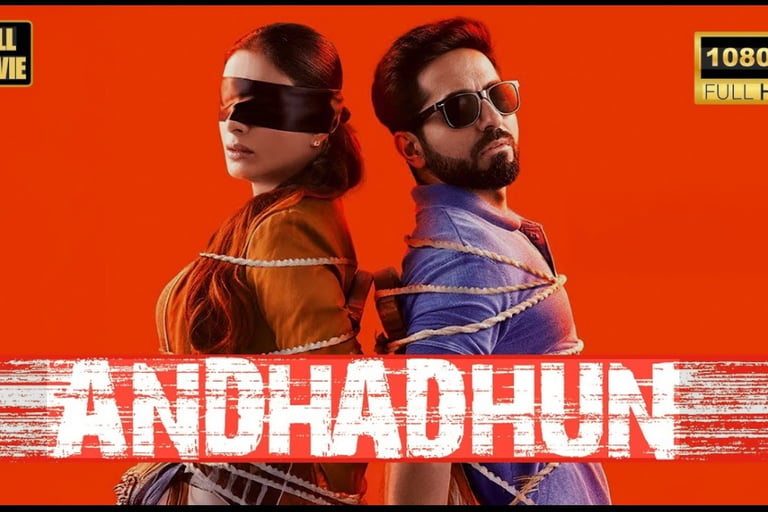
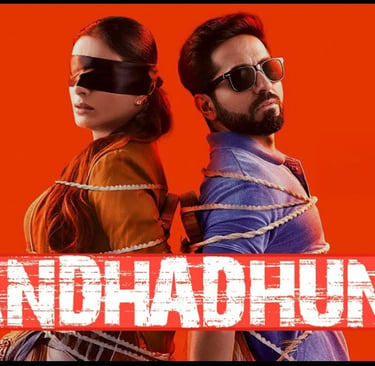
Now here’s where things get interesting. Andhadhun borrows this central idea the “fake blind pianist” and then takes a sharp left turn. Instead of simply stretching the short film into a feature-length version, director sriram raghavan builds an entirely new narrative around it. The result isn’t a copy; it’s more like a creative explosion sparked by a single idea.
From the moment the film begins, it establishes its own tone. There’s humor, but it’s dark. There’s romance, but it’s uneasy. And there’s danger lurking in places that initially feel safe. The protagonist, played with remarkable restraint, becomes the center of a world that feels increasingly unstable. Unlike the short film, where the tension is contained and focused, Andhadhun expands outward, introducing multiple characters, each with their own secrets, motivations, and moral compromises.
What makes this expansion work is how seamlessly it blends genres. One moment, you’re watching what feels like a light, almost quirky story about a struggling artist. The next, you’re deep in a crime thriller where every action has consequences. And just when you think you’ve figured out the pattern, the film shifts again. It refuses to settle into a single identity, and that unpredictability becomes its biggest strength.
This is where the distinction between “inspired by” and “remake” really matters. A remake typically follows the structure of the original, recreating its key moments with minor variations. Andhadhun does the opposite. It uses the premise of L’accordeur as a starting point, then constructs something far more complex. Entire plotlines, characters, and twists are original to the film. The moral dilemmas it explores go deeper, and the stakes feel much higher.
In fact, if you were to watch the French short and then Andhadhun, the similarities would feel almost minimal beyond the initial setup. It’s like recognizing the seed of an idea but witnessing an entirely different tree grow from it.
One of the most compelling aspects of Andhadhun is how it plays with perception not just within the story, but with the audience itself. You’re constantly asking: who is telling the truth? Who is pretending? And perhaps most importantly, what are we choosing to believe? The film doesn’t hand out easy answers. Instead, it leans into ambiguity, especially in its now-famous ending, which has sparked countless theories and debates.
That ambiguity is not something it inherits from the short film; it’s something it amplifies. Where L’accordeur packs a tight, contained punch, Andhadhun lingers. It invites interpretation, discussion, and even disagreement. And in doing so, it transforms from just a thriller into an experience.
Another reason the film stands out is its characters. They are not neatly categorized into heroes and villains. Everyone operates in shades of grey, making choices that are often selfish, desperate, or morally questionable. This complexity adds layers to the story, making it far more engaging than a straightforward adaptation would have been.
Director sriram raghavan deserves particular credit here. Known for his knack for crafting thrillers that defy expectations, he takes a risk by not playing it safe. Instead of sticking closely to the source material, he trusts the audience to embrace something unpredictable. That confidence pays off, resulting in a film that feels fresh despite its borrowed premise.
It also raises an interesting question about creativity in cinema. How much of an idea needs to be original for a film to be considered original? Is borrowing a premise enough to diminish its value, or does the execution matter more? Andhadhun makes a strong case for the latter. It shows that inspiration doesn’t limit creativity it can actually fuel it.
In the world of filmmaking, stories have always been borrowed, adapted, and reimagined. What sets certain films apart is how they transform those influences into something new. Andhadhun doesn’t hide its inspiration, but it doesn’t rely on it either. Instead, it builds on it, expands it, and ultimately outgrows it.
This is perhaps why the “remake” label feels too restrictive. It doesn’t capture the film’s ambition or its originality. Calling it a remake suggests a level of dependence on the source material that simply isn’t there. On the other hand, ignoring the influence of L’accordeur would be equally misleading. The truth lies in acknowledging both—the inspiration and the transformation.
Add maybe that’s what makes Andhadhun such a fascinating case study. It exists in that uncomfortable, intriguing space between originality and adaptation. It challenges the way we think about storytelling, reminding us that ideas are rarely born in isolation. They evolve, they merge, and sometimes, they become something far greater than their origins.
For audiences, though, all of this analysis comes second to the experience of watching the film. Because at the end of the day, what matters most is how it makes you feel. And Andhadhun delivers on that front effortlessly. It keeps you engaged, surprises you at every turn, and leaves you with questions that don’t have easy answers.Write your text here...