E is for... The "Eileen" Experiment: The Bestseller Written as a "Prank"
In the world of literary criticism, we often treat masterpieces as sacred objects works of art that flowed from an author’s soul in a moment of pure, unadulterated inspiration. Specifically, how Ottessa Moshfegh, one of the most provocative voices in modern fiction, decided to "engineer" a bestseller out of spite, boredom, and a "how-to" manual.
Kriti Singh
4/5/20263 min read
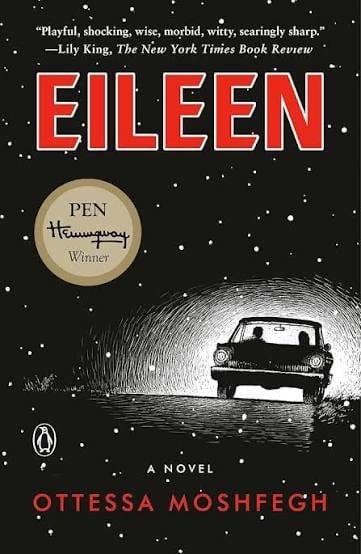
In the world of literary criticism, we often treat masterpieces as sacred objects works of art that flowed from an author’s soul in a moment of pure, unadulterated inspiration. Specifically, how Ottessa Moshfegh, one of the most provocative voices in modern fiction, decided to "engineer" a bestseller out of spite, boredom, and a "how-to" manual.
1 The "Economic" Gamble
Before Eileen became a New York Times bestseller and a Booker Prize-shortlisted novel, Ottessa Moshfegh was a "struggling" writer in the most literal sense. She was talented, but she wasn't "marketable."
The Juicy "Prank" Secret:
Frustrated by the publishing industry’s obsession with "commercial" tropes, Moshfegh made a radical decision. She didn't sit down to write a "literary" novel. She went to a bookstore and bought a book titled "How to Write a Bestseller."She treated the writing guide as a set of instructions to be followed to the letter. She chose a 1960s "Noir" setting because it was "safe" and "marketable." She gave it a "unreliable narrator" because that was the "C" for Trend at the time (think Gone Girl or The Girl on the Train).
The Result:
She essentially "pranked" the industry by proving she could do their "job" better than they could. But because she is Moshfegh, the essence of her dark, grimy style couldn't be contained. The "Bestseller" she wrote turned out to be one of the most uncomfortable books ever to hit the mainstream.
2. The "Emetic" Aesthetic (The "Gross-out" Logic)
Most "commercial" heroines are written to be relatable or aspirational. Eileen Dunlop is neither. She is a 24-year-old woman working in a boys' prison who lives in a house filled with trash and an alcoholic father.
The Investigative Angle:
Moshfegh used the Excretion as a weapon. Eileen is obsessed with her own bodily functions, her lack of hygiene, and her "E" for Eerie physical sensations. Why? Because Moshfegh wanted to see if she could make a "Mainstream" audience fall in love with a character who is fundamentally "repulsive" by society’s standards.
She took the "Pinteresty" 1960s aesthetic the high hair, the sharp coats, the "chic" silhouettes and smeared them with dirt. It was an "E" for Experiment in whether "Style" could survive "Stench.”
3. The "Secret" Jewelry Code: Anne Hathaway’s Wardrobe
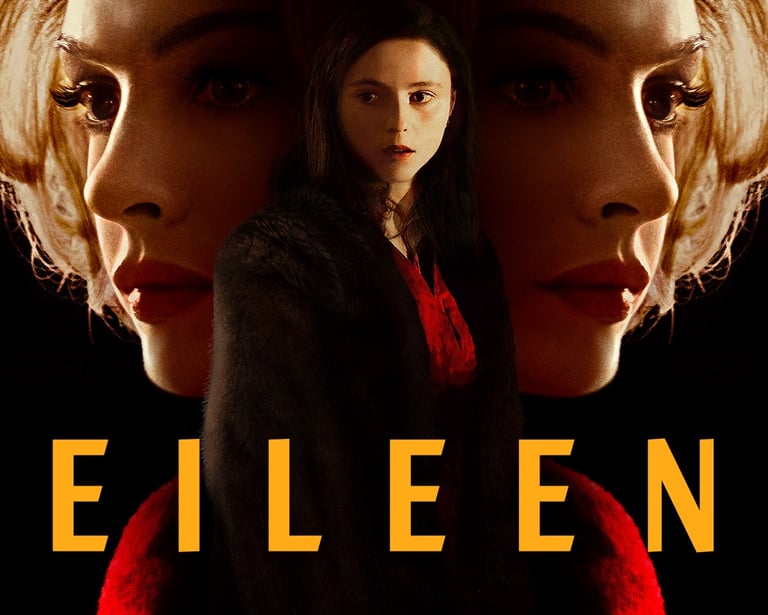
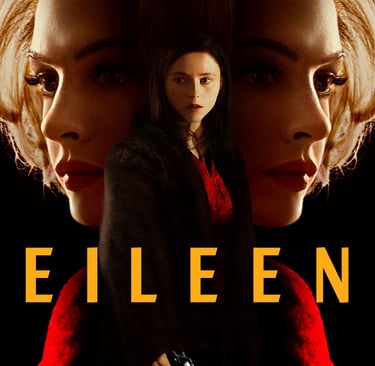
When the book was adapted into a film in 2023, the production team had to find a way to translate this "literary prank" into a visual medium. This is where the Earrings comes in.
The Visual Trivia:
Anne Hathaway plays Rebecca, the glamorous, sophisticated woman who enters Eileen’s life and changes everything. To the audience (and to Eileen), Rebecca is the Enchantment. She represents everything Eileen wants to be.
The "Wait, What?" Detail:
If you look closely at Rebecca’s jewelry, it tells a different story. Her earrings are sharp, metallic, and unnaturally large. They don't just "decorate" her; they frame her face like a Cage or a Predator.
Eardrops on Rebecca are a visual warning. They are "too" perfect, "too" sharp. They signal that Rebecca isn't a savior; she for Entrapment. She is the catalyst that will lead Eileen into a Dark and irreversible crime.
4. The "Escape" Ending (The Blueprint Flip)
The biggest "betrayal" of the "How to Write a Bestseller" manual happens in the final pages. Most thrillers end with a Capture or a Justice. The villain is caught, or the hero is redeemed.
The Moshfegh Flip:
Moshfegh chose Escape. Eileen doesn't go to jail. She doesn't "learn a lesson." She simply disappears into the "E" for Ether of her own life.
By refusing to give the reader a "clean" ending, Moshfegh proved her original point: that the Engineering of a story is only a tool. The "real" power of a book lies in its refusal to play by the rules. She followed the "How-to" guide just long enough to get the contract, and then she burned the guide to the ground.Write your text here...
5 Every Literary Critic's Dilemma
As a book blogger, Eileen gives you the perfect Discourse. It asks the question: Is a book still "Art" if it was written as a "Prank"?
The Verdict:
The irony is that by trying to write a "bad" commercial book, Moshfegh wrote a "brilliant" literary one. She proved that you can't Erase true talent, even when you’re trying to hide it behind a Bestseller mask.
Qotd:
If you were broke and frustrated, would you try to "game" the system? Could you follow a "How to Write a Bestseller" guide without letting your own Eccentricitytake over?
And more importantly: Have you noticed the predatory Earrings in the movie yet? Let’s talk about the Eileen in the comments!
This post is a part of Blogchatter A2Z Challenge 2026
Backlink: