H is for... The "Historical" Horror: The Blueprint Margaret Atwood Refused to Invent
When Margaret Atwood sat down to write The Handmaid’s Tale in 1984 (in West Berlin, while the Wall was still up), she gave herself a "Constraint that would make most writers panic: She would not include a single event, technology, or law that had not already happened in human history.
Kriti Singh
4/9/20262 min read


As a book blogger and digital creator, we often praise authors for their imagination,But for the letter "H," we are looking at a "blueprint" built on a terrifying rule of Honesty.
When Margaret Atwood sat down to write The Handmaid’s Tale in 1984 (in West Berlin, while the Wall was still up), she gave herself a "Constraint that would make most writers panic: She would not include a single event, technology, or law that had not already happened in human history.
1. The "Historical" Heist
The Handmaid’s Tale isn't Fiction; it’s a Collection of real-world horrors.
The Investigative Detail:
Atwood kept a Grave collection of newspaper clippings throughout the early 80s.
• The Harvard Secret: The setting of Gilead is Harvard University. She chose this because the "blueprint" of America’s most elite Intellectual space was originally founded by Puritans who had very Gilead-like views on women and religious law.
• The Reveal: The "Handmaid" system itself (the use of a "surrogate" for the elite) isn't a Fantasy it is taken directly from the Biblical story of Rachel and Bilhah in the Book of Genesis.
2. The "Hue" of Honor (The Red Dress Secret)
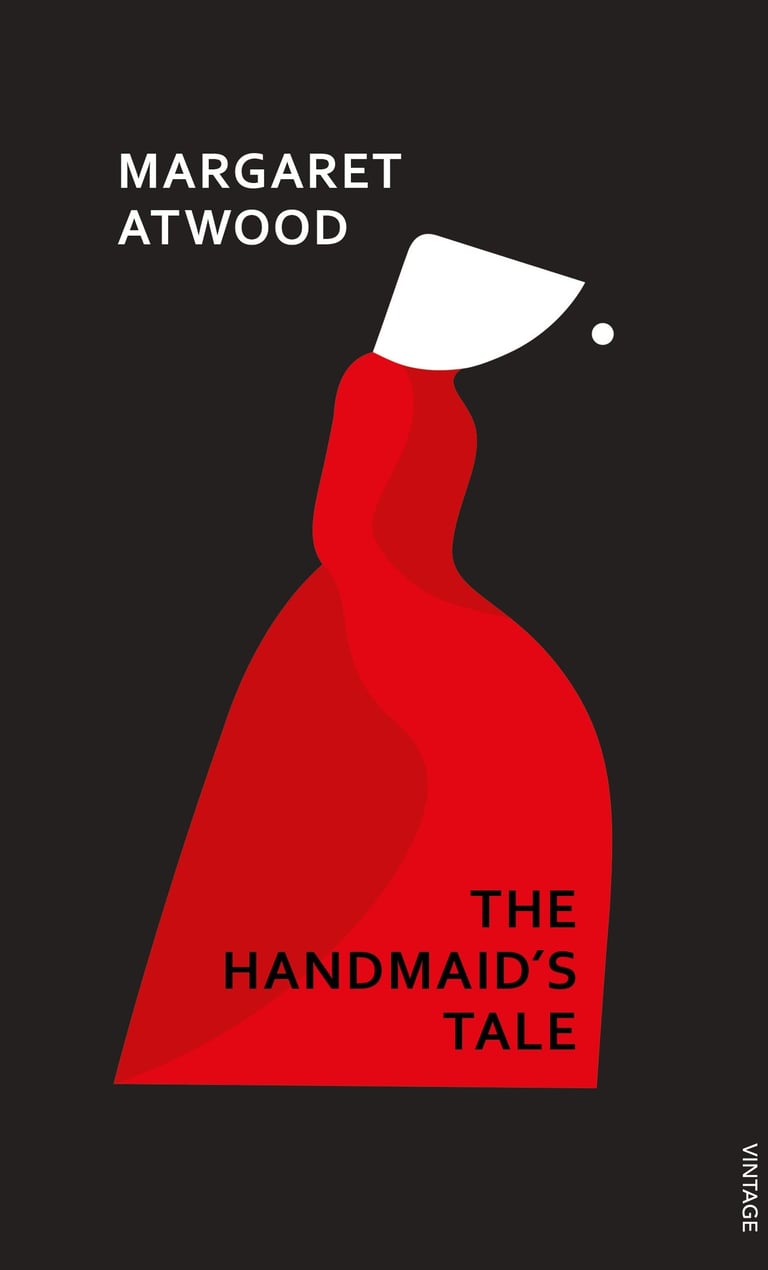
As a digital creator, you know that Color Theory is everything. The "Red Dress" is the most "chic" yet terrifying icon of the series.
The "Wait, What?" Fact:
The Hue of the Handmaids was not a random choice. Atwood based the "Red" on the Ecclesiastical (church) history.
• The Logic: In traditional Christian iconography, Mary Magdalene is often depicted in Red (the color of Sin and Passion), while the Virgin Mary is in Blue.
• The Twist: By forcing the Handmaids into red, Gilead is "engineering" their identity as Sinners who are only useful for their fertility. It is a Graphic visual for Branding of a human being.
3.The "Hidden" Underground (The Mayday Blueprint)
In the book, the "Mayday" resistance is a Ghostly organization. But the "investigative" juice lies in the name.
The Investigative Detail:
"Mayday" isn't just about the spring festival. Atwood chose it because it is the International distress signal (from the French m'aider, meaning "help me").
• The "Juicy" Bit: In the original "blueprint" of the book, Atwood left the ending Fragmented and ambiguous. We don't know if Offred escapes or is Executed.
• The Reveal: The "Epilogue" (the Historical Notes) is set in the year 2195. This tells us that Gilead eventually Failed. The story we read is actually a Geographical reconstruction of old cassette tapes the ultimate "investigative" project of the future.
4.The "Handwritten" Ghost (The "Nolite" Secret)
The most famous quote from the book is: "Nolite te bastardes carborundorum" (Don't let the bastards grind you down).
The Mind-Blowing Trivia:
This isn't Real Latin.
• The Story: It was a Joke a Latin phrase that Atwood and her friends used in school.
• The Investigative Angle: By putting a "fake" language in a "real" dystopia, Atwood was showing that the Human spirit will always find a way to create its own secret Code, even when their Education is taken away.
This article is a part of blogchatters A2Z challenge https://www.theblogchatter.com/