T is for Tomorrow, and Tomorrow, and Tomorrow: The Blueprint of the Infinite Game
Beyond the screen lies a Tomorrow. Discover the "investigative" blueprints of Gabrielle Zevin’s gaming masterpiece and the "S" for Shakespearean roots of a digital legacy.
Kriti singh
4/30/20262 min read
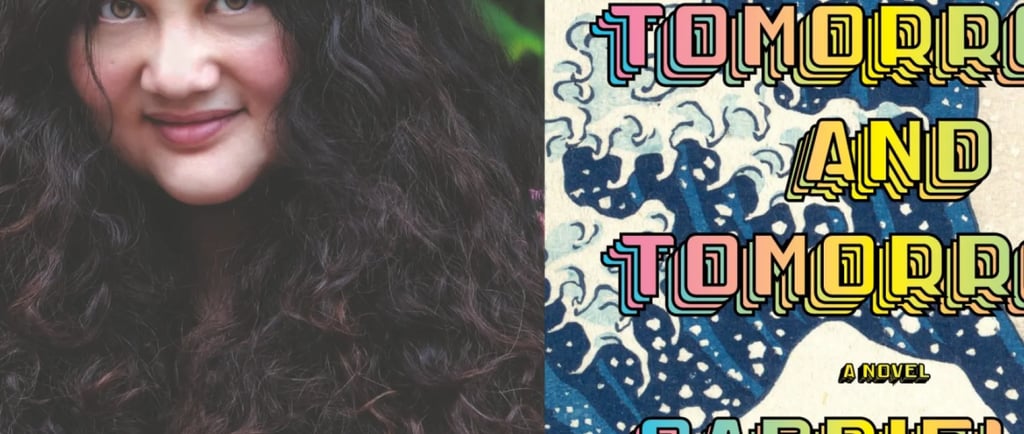
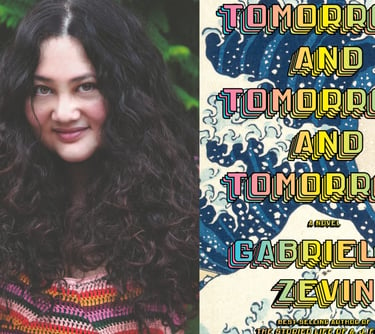
1. T is for Title — Not Decorative, Actually Functional
The title sounds dramatic until you clock where it’s from—Macbeth.
In the play, it’s bleak. Repetition as exhaustion. Life dragging itself forward.
Here, it lands differently.
Same words, completely different energy.
Because in this book, repetition isn’t depressing it’s useful.
You fail, you restart. You lose, you try again. The “tomorrows” aren’t poetic. They’re mechanical. That’s the shift. And it’s quiet enough that you almost miss it.
2. T is for Technical Gaming Without the Cringe
Books that deal with gaming usually fall apart because they either over-explain or reduce everything to vibes.
This one doesn’t do either
It treats game design like actual work:
slow
repetitive
occasionally brilliant, mostly frustrating
The characters don’t feel like “gamers.” They feel like people stuck in a process that doesn’t guarantee anything.
Even Ichigo their big break doesn’t get romanticised.
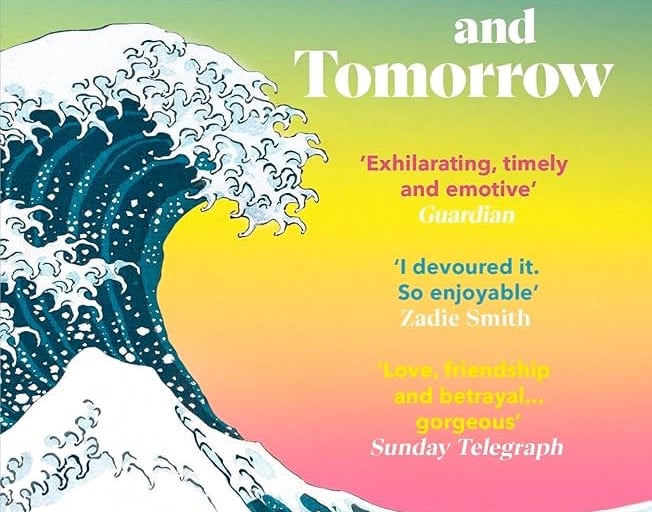
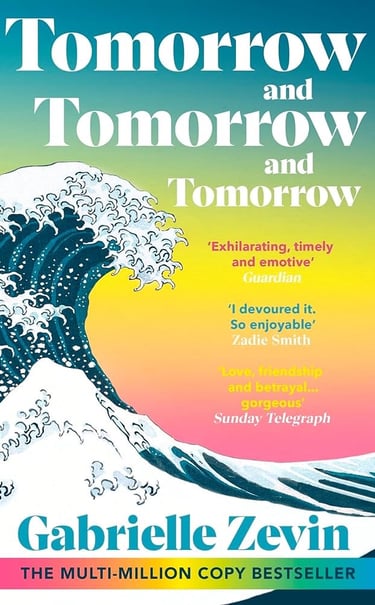
There’s a clear visual thinking behind it, pulling from The Great Wave off Kanagawa. Not in a showy way. Just enough to tell you this didn’t come out of nowhere.
That’s the difference. Nothing here is accidental.
3. T is for Time — Not Linear, Not Messy Either
The book jumps. Years pass. Things change off-page.
And somehow it still feels controlled.
That’s because it doesn’t treat time like a straight line. It treats it like movement with purpose—closer to how The Time Machine made time feel structured instead of abstract.
You’re not just watching life happen. You’re watching it loop, stall, pick up again.
There are stretches where nothing works. Then suddenly something clicks.
It’s uneven in a very intentional way.
4. T is for Tension — No Clean Label
Sam and Sadie are exhausting to define.
Not friends in the simple sense. Not lovers either. Not enemies.
Just… stuck to each other in a way that keeps shifting.
And the book never fixes that.
Which is what makes it interesting.
It reminds me of The Turn of the Screw not in plot, but in structure. You’re given multiple ways to read what’s happening, and none of them get confirmed.
So you’re left doing the work.
End Note
There’s no big speech about what the book means.
No dramatic attempt to wrap things up neatly.
It just builds something solid and lets it run.
That’s why it works.
Not because it’s emotional or “relatable” or whatever buzzword people are using this week.
This post is a part of blogchatter A2zchallenge https://www.theblogchatter.com/