U is for Ulysses: The Blueprint of the Modern Mind
Beyond the difficulty lies a universal truth. Discover the "investigative" blueprints of James Joyce’s Ulysses and the Secret map of the modern mind.
Kriti Singh
4/30/20264 min read
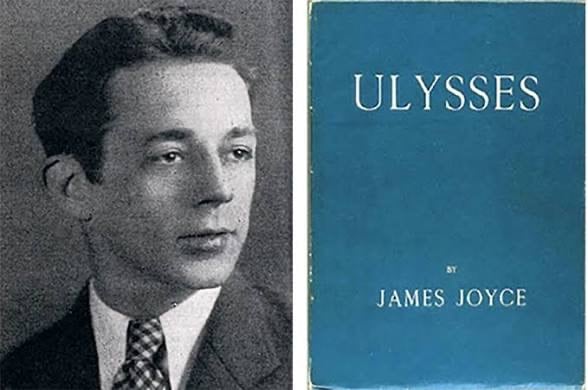
When James joyce published ulysses in 1922, he didn’t just write a novel. He built a blueprint. One that was banned, censored, dissected, worshipped and still manages to feel like it’s glitching in real time.
1. U is for Undercurrent (The Homeric Blueprint)
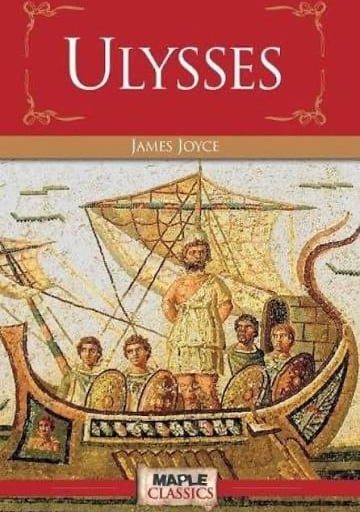
Let’s start with the part that sounds like literary trivia but is actually the operating system of the entire novel: Ulysses is mapped, almost obsessively, onto The Odyssey.
Not inspired by. Not loosely based on. Mapped.
There are 18 episodes in Ulysses, and each one corresponds—sometimes cleanly, sometimes cryptically—to a section of The Odyssey. Joyce never printed this guide inside the book. He let critics scramble for it. Which is very on-brand.
Here’s the clean version of the chaos:
• Leopold Bloom = Ulysses (Odysseus), but stripped of heroism and placed in Dublin with errands instead of epic battles.
• Molly Bloom = Penelope, but instead of weaving and waiting, she’s fully aware, fully embodied, and not remotely passive.
• Stephen Dedalus = Telemachus, searching, intellectual, slightly detached, and constantly spiraling inward.
Now the trick: Joyce doesn’t recreate the events of The Odyssey. He compresses the scale.
A man walking through Dublin to buy kidneys for breakfast becomes the equivalent of a mythic journey.
The “Calypso” episode? It’s just Bloom in his house. Domestic space. Tea. Letters. Thoughts drifting. But under the surface, it mirrors captivity, longing, delay.
The “Lestrygonians” episode? Bloom wandering through the city looking for lunch. But the structure echoes the land of cannibals except here, the horror is urban consumption. People eating, devouring, existing in a system that feels mechanical.
The undercurrent is doing all the heavy lifting. On the surface: ordinary. Underneath: epic.
That’s the point. Joyce is investigating grandeur hidden inside routine, without announcing it. You either catch it or you don’t.
2. U is for Unreadable? (The Style Blueprint)
Let’s address the reputation. Ulysses is often labeled Difficult, and honestly, that’s fair but also lazy.
It’s not difficult for the sake of being obscure. It’s difficult because each chapter is engineered with a completely different technical framework. Joyce is not writing one novel. He’s writing eighteen.
Each episode has its own style, rhythm, vocabulary, and internal logic. And he doesn’t warn you when it switches.
One chapter unfolds like a musical composition patterns, repetitions, tonal shifts. Another mimics a medical textbook, clinical and detached, reducing human experience into case-study language. Another is structured as a catechism: rigid questions and answers, almost interrogative in tone
And then there’s “Oxen of the Sun,” where the prose itself evolves through the history of the English language from archaic forms to modern slang. It’s not just storytelling. It’s linguistic time travel.
You’re not just reading content. You’re reading form as content.
And then comes “Penelope.”
Molly Bloom’s monologue. The part everyone talks about and half the people never finish.
It runs for thousands of words with almost no punctuation. No clean breaks. No polite pauses. Just thought, flowing into thought, into memory, into sensation.
Two periods. That’s it.
3. U is for United States v. One Book Called Ulysses (The Legal Blueprint)
Before Ulysses became a syllabus staple, it was contraband.
Literally.
Copies were seized. Burned. Blocked from distribution in both the UK and the US. The charge? Obscenity.
And to be fair, Joyce wasn’t exactly subtle. The book deals with sexuality in a way that was direct, embodied, and very far from the sanitized norms of early 20th-century publishing.
But the backlash turned into something bigger: a legal case that would redefine what literature is allowed to do.
The case United States v. One Book Called Ulysses became a turning point.
In 1933, Judge John Woolsey ruled that the book was not obscene. His reasoning wasn’t sentimental. It was analytical. He argued that while parts of the book were explicit, they were not designed to arouse. They were part of a larger artistic structure.
Intent mattered. Context mattered.
And just like that, the blueprint for literary censorship shifted.
This wasn’t just about Joyce anymore. It was about whether a book could be uncomfortable, unconventional, even offensive and still be protected as art.
4. U is for Under-the-Hood (The PR Blueprint)
Now, strip away the literary aura for a second and look at this from a PR lens, because this is where it gets quietly genius.
Ulysses didn’t start as a mass-market release. It couldn’t. No mainstream publisher would touch it.
Enter sulvia beach , owner of Shakespeare and Company.
She published the first edition in Paris in 1922. Not through a big press. Through a niche, independent bookstore with a specific audience: writers, thinkers, expats, intellectuals.
This was not wide distribution. This was targeted circulation.
And that constraint turned into strategy.
Because the book was banned in major markets, it gained a different kind of currency: exclusivity. People didn’t just want to read it they wanted access to it.
The controversy amplified the demand. The ban became the marketing.
Word spread. Not through ads, but through reputation. Through whispers. Through the kind of literary FOMO that can’t be manufactured but can absolutely be engineered under the right conditions.
By the time legal restrictions started lifting, Ulysses already had status.
it’s one of the most calculated literary blueprints ever built—disguised as chaos, sustained by precision.
verdict
You don’t need to love it. A lot of people don’t.
But dismissing it as random or indulgent misses the point entirely.
Every strange choice in Ulysses is doing a job.
You just have to decide how much of that job you’re willing to investigate.
This blog is a part of blogchatter A2z challenge