V is for verity: The Blueprint of the Manipulative Narratives for
Blog post description.
Kriti singh
4/30/20263 min read
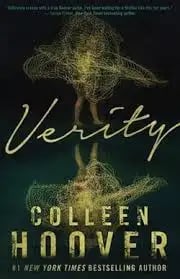
Verity doesn’t just rely on twists it messes with something far more unstable: your sense of truth. When colleen hoover published verity she didn’t just write a thriller. She built a narrative that quietly dares you to pick a side… and then makes you regret it.
1. V is for Verity Crawford (The Villain Blueprint)
Let’s start with the obvious—Verity herself. Even her name feels like a setup. “Verity” literally means truth. And that’s where Hoover gets clever, because nothing about this character feels stable enough to hold that meaning.
Verity Crawford is introduced to us through absence first. She’s the successful author who can’t finish her series after an accident. She’s the shadow in the house. The silent presence upstairs. Before she even speaks, she’s already controlling the narrative just by not being in it
Then comes the manuscript.
And this is where things stop being straightforward.
Lowen, our main character, finds Verity’s autobiographical manuscript—raw, disturbing, and way too detailed to feel like fiction. It reads like a confession. Not polished, not performative. Just brutally honest in a way that makes you uncomfortable to even be reading it.
And that’s the hook.
Because once you read it, you can’t unread it.
The manuscript paints Verity as calculating, obsessive, and capable of things that cross every moral line. It doesn’t feel exaggerated. It feels… intentional. Which is exactly why it works.
Now here’s the problem: we never actually “meet” that version of Verity in real time.
The Verity in the house is quiet. Almost vacant. Unresponsive.
So which one is real?
That’s not a rhetorical question. The book never gives you a clean answer, and that’s where the manipulation starts.
Because as a reader, you start filling in gaps. You start deciding what feels more believable. And once you’ve made that choice, the book slowly starts making you question it.
Was the manuscript a confession? Or was it performance?
2. V is for Version (The Manuscript Blueprint)
If there’s one thing Verity does right, it’s structure.
This isn’t just a story it’s two competing narratives running side by side.
You have Lowen’s present-day perspective: what she sees, what she feels, what she thinks is happening.
And then you have the manuscript: Verity’s voice, unfiltered and deeply unsettling.
At first, it feels like the manuscript is the “truth” layer. It’s detailed, specific, and emotionally charged in a way that makes it hard to dismiss.
But then you start noticing things.
The timing feels too perfect. The tone feels a little too aware. Certain details feel written for impact rather than honesty.
And suddenly, you’re not just reading you’re analyzing.
The tension doesn’t come from “what happens next.” It comes from “which version do I believe?”
That’s a very different kind of engagement.
Most thrillers guide you toward a reveal. Verity does the opposite. It hands you multiple possibilities and lets you sit in the discomfort of not knowing which one is real.
Even the ending refuses to settle things.
There’s the infamous letter—the one that flips everything again. If the manuscript made you believe one version of Verity, the letter pushes you in the opposite direction.
And just when you think you’ve figured it out… you realise you haven’t.
The bonus chapter Hoover released later didn’t help either. If anything, it added more fuel to the confusion. Instead of clarity, it gave readers more room to argue, debate, and spiral.
And honestly, that might have been the smartest move.


3. V is for Viral (The Self-Published Blueprint)
Here’s something that doesn’t get talked about enough Verity wasn’t always the massive hit it is now.
It started off as a self-published project.
Which makes its success even more interesting.
Because this wasn’t a book pushed by traditional marketing right from the start. It grew because people couldn’t stop talking about it.
And not in a generic “this was good” way.
More like: “I don’t know what I just read, but you need to read it so we can talk about it.”
That kind of reaction is rare, and it’s incredibly powerful.
The book thrives on discussion. On disagreement. On that need to validate your interpretation by hearing someone else’s.
Platforms like Bookstagram and BookTok played a huge role in this. Short reviews, reaction videos, heated comment sections Verity fits perfectly into that ecosystem.
It’s not just a reading experience. It’s a social one.
And from a book marketing perspective, that’s gold.
Because the story itself becomes the campaign.
No heavy spoilers needed. Just enough intrigue to pull someone in.

This post is a part of Blogchatter A2Z Challenge 2026.