
Y is for Yellowface: The Blueprint of the Yield
Beyond the theft lies the Yellow. Discover the "investigative" blueprints of R.F. Kuang’s "meta" masterpiece and the Secret Academic "History she " Engineered.
Kriti singh
5/1/20263 min read
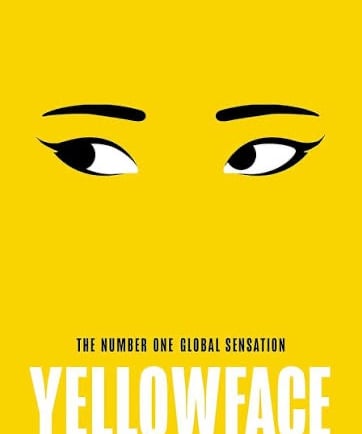
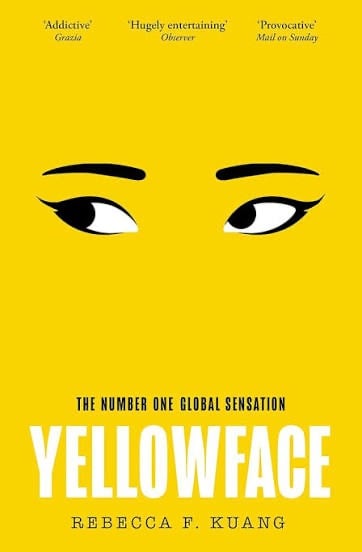
In publishing, careers are often built on timing, reputation, and perception. Yellowface by R.F. Kuang turns those mechanics into the subject of the novel itself. Published in 2023, the book follows June Hayward, a struggling white novelist who steals the unfinished manuscript of her dead friend and rival, Athena Liu, an acclaimed Asian American author. June edits the book, publishes it under the name Juniper Song, and watches her career rise on a lie.
What Kuang constructs is less a morality play and more an operational breakdown of how the literary industry works when nobody is speaking honestly. The novel examines who gets promoted, who gets protected, and who gets rewritten.
1.Yield: The Commercial Use of Identity
The title Yellowface references the old entertainment practice of white performers portraying Asian characters. Kuang modernizes that concept by relocating it to publishing. Instead of makeup, the disguise is branding.
June does not merely steal Athena’s manuscript. She gradually adopts an identity package that can be sold. Her publisher leans into the ambiguity of “Juniper Song,” a name that sounds less visibly white. Author photos, publicity copy, and marketing strategy all become part of the deception.
The novel’s central argument is practical: in a competitive market, identity can become product positioning. Diversity language may be sincere in some cases, but it can also be instrumentalized. Kuang shows how institutions that publicly celebrate authenticity can privately reward performance.
That is why the word “yield” matters. June yields profit for the people around her. As long as sales continue, ethical questions remain negotiable.
2. Yale: Prestige as Infrastructure
Both June and Athena emerge from the same elite literary pipeline. In the novel, they met at Yale. That detail is not decorative. It establishes how prestige systems function.
Elite universities, MFA programs, fellowships, and early reviews often determine which writers are framed as “serious” before readers ever decide for themselves. June and Athena begin with similar credentials, yet Athena converts that capital into visibility while June stalls.
Kuang herself has spoken about balancing fiction with doctoral work at Yale, and her academic background often feeds directly into her fiction.
In Yellowface, prestige does two things:
It grants legitimacy.
It intensifies resentment among peers who expected equal outcomes.
June’s theft is partly criminal, but it is also competitive. She believes the system overlooked her. That belief becomes the fuel she uses to justify fraud.


3. Y is for Yearning: Envy as Career Engine
Many thrillers depend on murder, secrets, or conspiracies. Yellowface runs on envy.
June is not starving. She is not unknown. She is simply less successful than Athena. That distinction matters. Her grievance comes from proximity. She can see the life she wants because Athena has it.
Kuang tracks envy in professional detail:
invitations June does not receive
reviews she does not get
sales numbers she cannot reach
attention that always lands elsewhere
This makes June persuasive to herself. She frames theft as correction. She convinces herself she is finally receiving what she deserved all along.
That internal logic is one of the book’s sharpest observations: people rarely narrate themselves as villains. They narrate themselves as delayed winners.
4. Y is for Yield Curve: The Publishing Machine
Once June submits Athena’s manuscript, the novel becomes a procedural account of how a book is manufactured.
Editors revise positioning. Publicists plan launch angles. Social media teams monitor sentiment. Booksellers respond to buzz. Review outlets amplify momentum. Bestseller lists convert visibility into legitimacy.
Kuang understands that success is cumulative. A book that appears successful attracts more opportunities to succeed.
June’s fraud survives not because nobody notices, but because many people benefit from not noticing. Her publisher has invested money. Publicists need a campaign win. Media outlets want a story. Readers want a conversation.
This is one of the novel’s coldest insights: systems often protect what they have already monetized.
5. The Yield of History
The stolen manuscript concerns Chinese laborers in World War I, a real historical subject that has often received less mainstream attention than other war narratives. Kuang uses this detail strategically.
The conflict is not only that June steals a manuscript. She steals access to neglected history and becomes the person rewarded for presenting it.
That dynamic reflects a recurring pattern in culture industries: marginalized stories sometimes receive broader recognition only when filtered through more marketable intermediaries.
Kuang does not treat this as theory. She embeds it in plot mechanics.
Verdict
R.F. Kuang’s Yellowface is an industry novel disguised as a thriller. It investigates what happens when prestige, identity, commerce, and insecurity collide in a market built on narrative control.
The “Y” in this blueprint is Yield because everyone in the story is trying to extract returns:
June wants fame.
Publishers want sales.
Audiences want spectacle.
Social media wants conflict.
History itself gets repackaged for consumption.
This post is a part of blogchatter A2z challenge